Fluxus was an international, interdisciplinary community of artists, composers, designers and poets during the 1960s and 1970s who engaged in experimental art performances which emphasized the artistic process over the finished product.

John Cage– A pioneer of indeterminacy in music, electroacoustic music, and non-standard use of musical instruments, Cage was one of the leading figures of the post-war avant-garde. Critics have lauded him as one of the most influential composers of the 20th century.
Cage is perhaps best known for his 1952 composition 4′33″, which is performed in the absence of deliberate sound; musicians who present the work do nothing aside from being present for the duration specified by the title. The content of the composition is not “four minutes and 33 seconds of silence,” as is often assumed, but rather the sounds of the environment heard by the audience during performance.
Yoko Ono– a Japanese multimedia artist, singer, songwriter and peace activist. Her work also encompasses performance art, which she performs in both English and Japanese, and filmmaking.
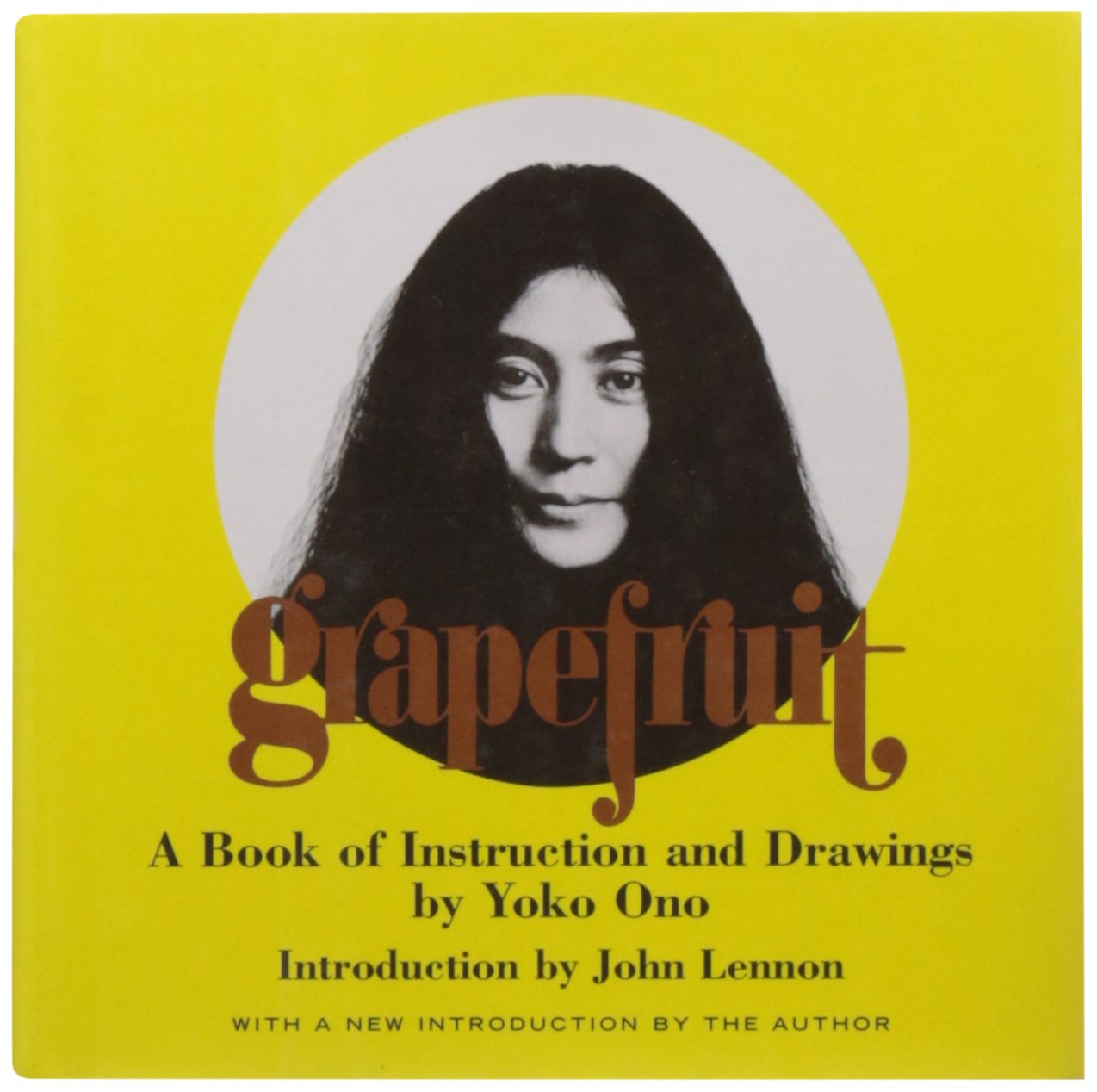
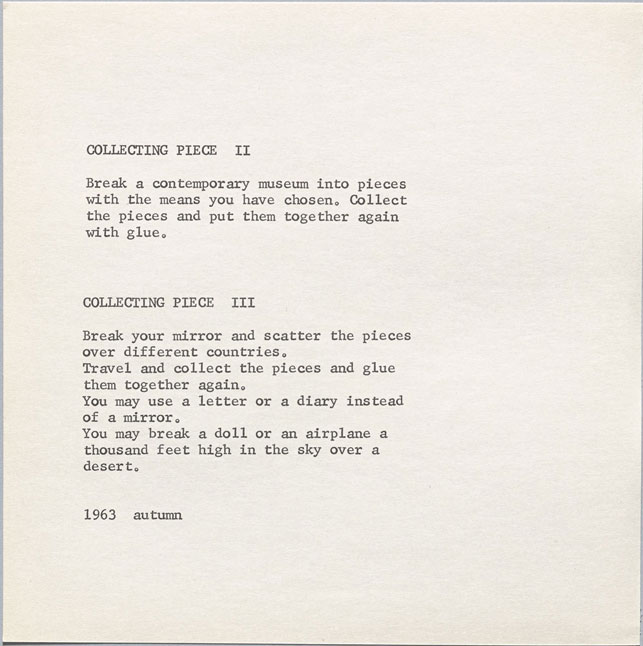
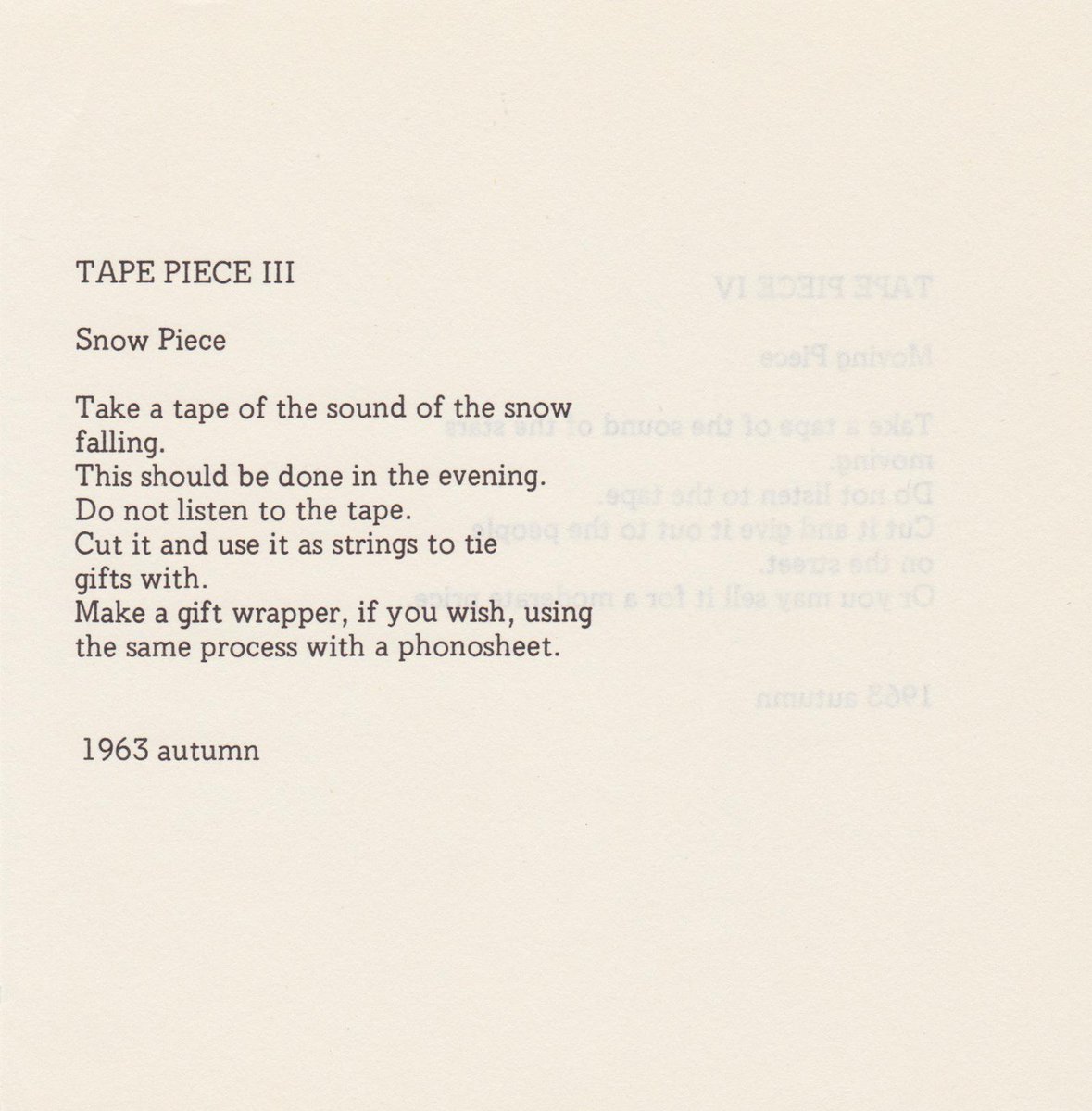
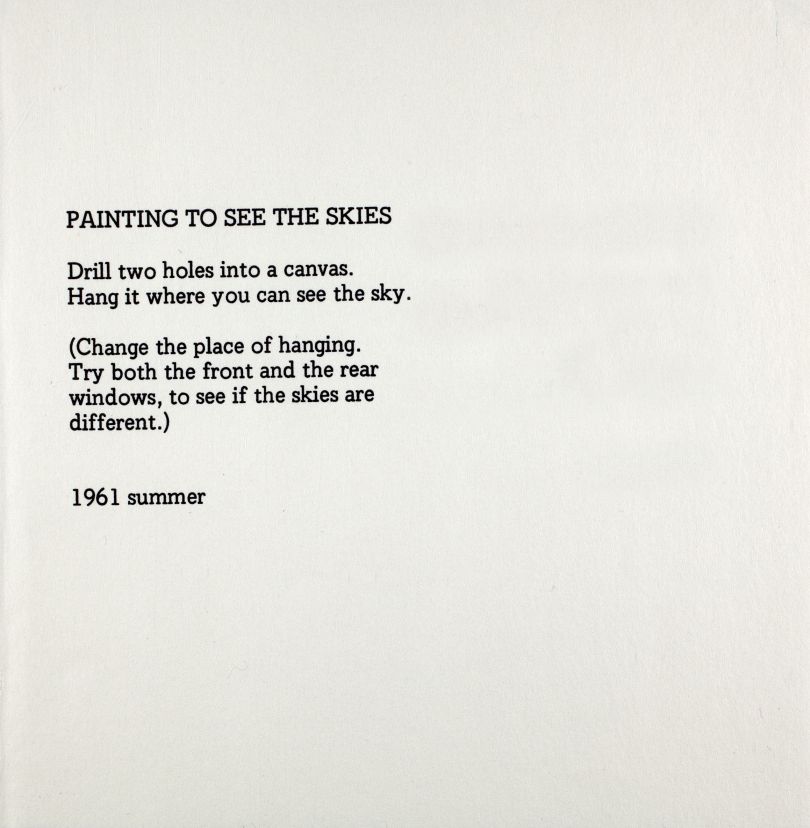
Grapefruit is an artist’s book written by Yoko Ono, originally published in 1964. It has become famous as an early example of conceptual art, containing a series of “event scores” that replace the physical work of art – the traditional stock-in-trade of artists – with instructions that an individual may, or may not, wish to enact.
Alison Knowles ‘I’m Making a Giant Salad’ –
‘Make a Salad’ is what the Fluxus artists termed an ‘event score’, a written instruction that can be acted out and changed according to the context in which it is performed.
George Maciunas marketed through the mail a wide range of objects made by other artists. ‘Fluxkit’ is a representative selection of these objects, and encompasses the range of forms in which Fluxus editions were issued: graphical scores for events, interactive boxes and games, journals and films.

Mail Art
Zines

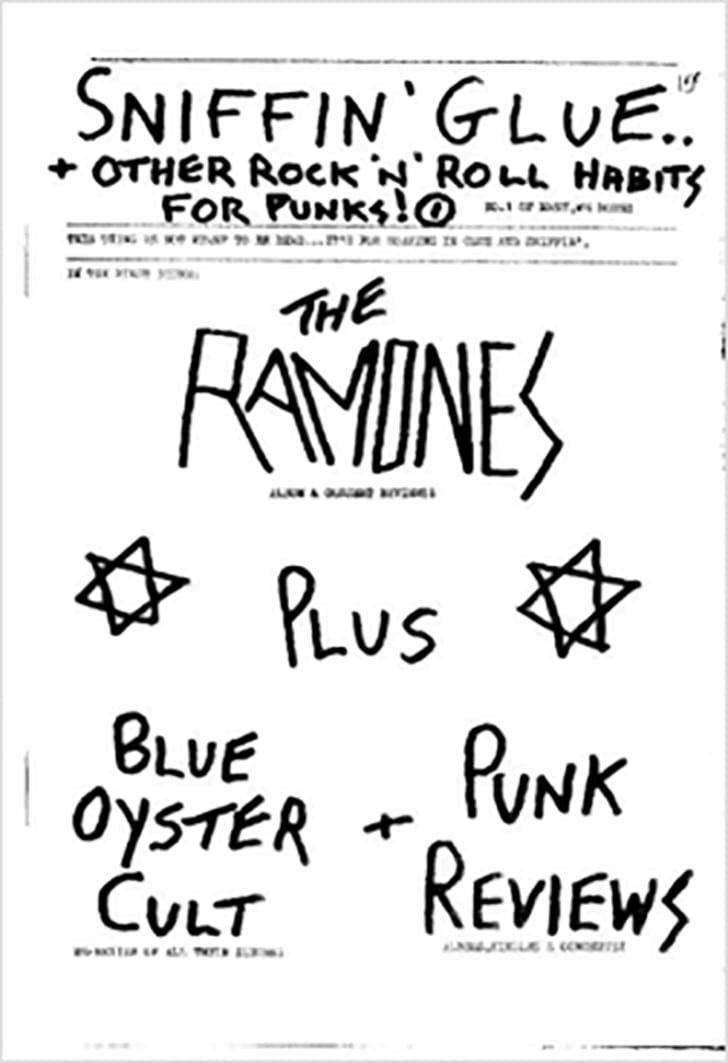
More here In the ‘70s and ‘80s, the main hub of zine culture became the punk scene in London, LA, and New York. Compared to the earlier sci-fi zines, punk zines had a grungier, DIY aesthetic that reflected the subjects being covered. Slash and other popular zines like UK-based Sniffin’ Glue covered seminal punk bands like The Clash, The Ramones, and Joy Division. The first issue of Punk, published in 1976, featured an interview with Lou Reed.
In the 1990s, zines flourished again thanks to the riot grrrl scene. As an alternative to the male-driven punk world of the past, riot grrrl encouraged young girls and women to start their own band, make their own zine, and get their voices heard. Key bands included Bikini Kill, Heavens to Betsy, Bratmobile, L7, and Sleater-Kinney. By 1993, an estimated 40,000 zines were being published in North America alone, many of them devoted to riot grrrl music and politics.
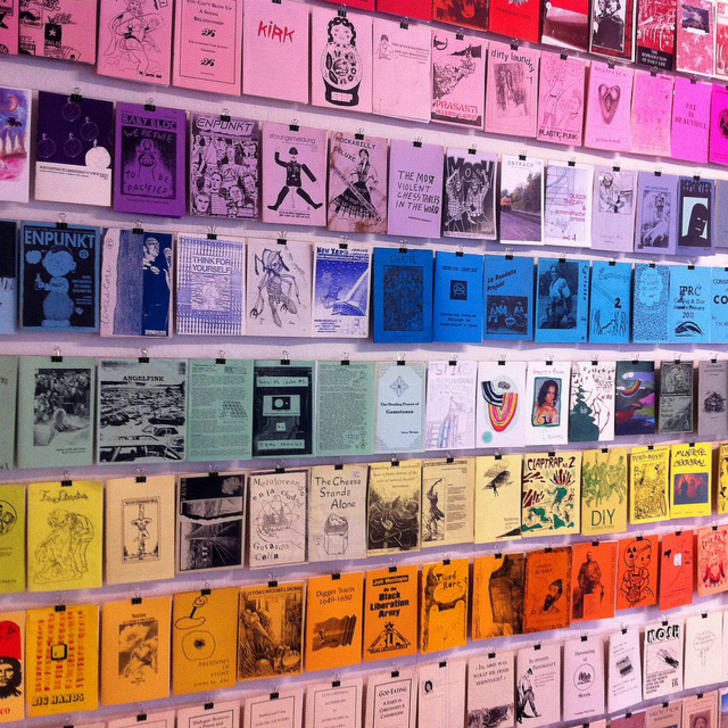
Today, zines are more diverse than ever. The rise of the internet has helped make the cost of production almost zero, and online zines such as Plasma Dolphin, Pop Culture Puke, Cry Baby, and Cherry have brought young artists together to collaborate.
Internet
F.A.T. Lab
F.A.T. Lab was a collective of artists, engineers, scientists, lawyers, and musicians, dedicated to the merging of popular culture with open source technology. F.A.T. Lab was known for producing artwork critical of traditional Intellectual Property Law in the realm of new media art and technology. F.A.T. Lab has historically created work intended for the public domain, but has also released work under various open licenses. Their commitment is to support “open values and the public domain through the use of emerging open licenses, support for open entrepreneurship and the admonishment of secrecy, copyright monopolies and patents. F.A.T. Lab’s mission has been approached through various methods of placing open ideals into the mainstream popular culture, including work with the New York Times, MTV, the front page of YouTube and in the Museum of Modern Art permanent collection.”
Pizza Seance- http://fffff.at/pizza-seance/

THE FREE UNIVERSAL CONSTRUCTION KIT– http://fffff.at/free-universal-construction-kit/
Hamster Wheel Standing Desk by Robb Godshaw
https://www.instructables.com/Hamster-Wheel-Standing-Desk/
Skincare and opsec forever by Addie Wagenknecht
Finish a Raw Basement by Ilana Harris-Babou
ART THOUGHTZ: How To Be A Successful Artist
Yaeji’s homage to the DIY beauty tutorials found on YouTube on ‘Last Breath‘
Packard Jennings, Business Reply Pamphlet, 2006
This small, sixteen-page instructional pamphlet (2×5″) was produced and put inside the postage-paid, business-reply envelopes that come with junk mail offers. Every envelope collected from participants over the course of a year was stuffed with the pamphlet and mailed back to the company of origin. It is a practical anarchist’s guide for office workers to obtain Utopia.

Imin Yeh Paper Pickle, 2019
Sam Levine Zoom Escaper Tutorial
HowToBasic
Hito Steyerl, How Not to be Seen: A Fucking Didactic Educational .MOV File, (2013).
How Not to Be Seen—a video by artist and critic Hito Steyerl—presents five lessons in invisibility. As titles that divide the video into distinct but interrelated sections, these lessons include how to: 1. Make something invisible for a camera, 2. Be invisible in plain sight, 3. Become invisible by becoming a picture, 4. Be invisible by disappearing, and 5. Become invisible by merging into a world made of pictures.1
Some of these methods may seem impossible. How, for example, can someone in plain sight go unseen? Steyerl herself often ponders this question. Her work is fueled by her critical examination of the production, use, and circulation of images from the mid-twentieth century into the Information Age. Referring to the countless images generated and circulated by such sources as social media and surveillance technologies, and the impact of these technologies on our lives, she asks: “How do people disappear in an age of total over-visibility?…Are people hidden by too many images?…Do they become images?”2
A satirical take on instructional films, How Not to Be Seen features a mix of actual and virtual performers and scenes, which illustrate the strategies for becoming invisible, communicated in an authoritative narrative voiceover. In the fourth lesson, the narrator outlines ways of disappearing—including “living in a gated community” or “being a disappeared person as an enemy of the state”3—while panning shots of architectural renderings of luxury living and public spaces, populated largely by computer-generated people, unfold across the screen.
Among the video’s central symbols is a real place: a patch of marked concrete in the California desert once used by the U.S. Air Force to calibrate their surveillance cameras. The concrete is riddled with cracks and desert scrub. As the artist indicates throughout her video, sites like this have fallen into disrepair not because surveillance has stopped, but because more advanced systems are now in use, which do not need to be tested there. These newer systems ensure that we are always visible, and might benefit from her lessons in how not to be seen. Text Source
How To with John Wilson
Documentary filmmaker John Wilson embarks on an odyssey of self-discovery and cultural observation by covertly filming the lives of fellow New Yorkers while trying to share advice.
The NPR Podcast Guide: How To Do Everything
“Don’t be stumped by seemingly small but stress-inducing problems like How do I spread cold butter on a piece of toast? (answer: use a cheese grater). And learn exactly what to do when confronted with dangerous situations like, How do I stop a sinkhole? (answer: “dynamic compaction” – drop a huge crane above a potential sinkhole to compress the soil).” Read more here
https://podcasts.apple.com/us/podcast/how-to-do-everything/id420543296?i=1000378028358
 NEW LENSES: Experimental Capture and Release
Leave a comment