Reading Text on this page comes in part from ‘A short History of Self- Representation in Digital Art by Tina Sauerlaender
Hennessy Youngman Art Thoughtz
Hennessy Youngman is a persona invented and performed by Jayson Musson. Youngman makes addresses to the Internet at large in online episodes of a series titled “Art Thoughtz.”
Most often, Youngman takes on the role of art critic or cultural critic while speaking to topics concerning art, race, gender, and popular culture. In addition, Youngman makes DJ mixtapes called “CVS Bangers” with songs interspersed with seemingly random statements and air horn blasts.
Famous New Media Artist Jeremy Bailey
https://www.jeremybailey.net/
Self-proclaimed “Famous New Media Artist Jeremy Bailey” augments his body with rudimentary digital adornments. In The Web I Want (2015), the artist chatters without pause about the fantastic possibilities the internet offers for him. He appears in denim shorts and his naked torso is covered by two clocks, stock prices, and weather forecasts, all resembling oversized nipples, which move in accordance with his body.
Lonelygirl15
more
lonelygirl15 is a web series launched June 16, 2006, in the early days of YouTube. Initially presented as an authentic video diary “vlog”, it gained wide media attention in September 2006 when the show was revealed to be fictional. The plot began with the mundane life of a teenage girl; the narrative became increasingly bizarre, portraying her dealings with secret occult practices within her family, including the mysterious disappearance of her parents, and a “secret” ceremony prescribed by leaders of the cult. The series was created by Mesh Flinders, a screenwriter and filmmaker from Marin County, California, Miles Beckett, a surgical residency dropout turned filmmaker, and Greg Goodfried, a former attorney with Mitchell, Silberberg and Knupp, LLP.
“Beckett had a thought. How could you really tell what was real and what was fake on YouTube? Anyone could buy a webcam or cameraphone and upload what they wanted. So how easy would it be to create an entirely fictitious YouTuber? “I thought it would be really cool if there was a video blogger and you told the story just like you would a TV show,” he said. He sat on this idea for a while. Then, one evening at a karaoke bar in LA, he met Mesh Flinders. The two hit it off so well, Beckett took a chance. He told Flinders about this new medium and his idea for a new story on it. Within a matter of days, they began writing the script. Within two weeks, they had the entire plot points for the first three months of videos.”
Amalia Ulman
“Excellences & Perfections” Archive


In her four-month-long Instagram performance Excellences & Perfections (2014), Ulman staged a transition through multiple stereotypes of female self representation on social media. She becomes an escort, augments her breasts, has nervous breakdowns, and subsequently redeems herself in the healthy mindfulness lifestyle of the West Coast. Many of her followers mistook the performance as a part of Amalia Ulman’s real life because there was no clear boundary that demarcated it as otherwise. In her second Instagram performance Privilege (2016), Amalia Ulman staged the story of an office worker who becomes pregnant. Again, many people mistook the plot for being real. The fact that Amalia Ulman used her own appearance, her Instagram account with her real name, themes and a visual language that echoed the conventions of authentic Instagram content, led to this false assumption on behalf of many users.
@RichCaroline

Self-proclaimed “Ohio socialite” Caroline Ricke oozes haughty humor in her viral TikTok with over 3 million views, one of the many sketches in which she steps into her Rich Caroline persona to perform perfectly-executed dialogue and hilariously-timed jokes about her wealth, popularity and beauty.
Rich Caroline is sarcastic, aloof, dramatic—her 2000s-esque videos with editing reminiscent of our favorite nostalgia-inducing Disney Channel shows have gone viral, and her specific brand of comedic genius that seamlessly teeters between “too funny to be staged” and “too clever to be real” has accumulated her character a well-deserved crowd of over 2 million followers across TikTok, Instagram and YouTube.
Andy Kassier
Andy Kassier as a guide to taking the perfect selfie. In a few, simple steps, visitors can learn how to achieve media recognition thanks to an acoustically stimulating demonstration and then apply this directly next to a life-size cardboard stand-up of Andy Kassier.
The Instagram performance Success Is Just a Smile Away (2013–) by German conceptual artist Andy Kassier is primarily concerned with issues of self-marketing on social media. With a healthy dash of irony, conveyed in overstated selfies and overmotivated captions, Kassier exposes the deceptive world of self-dramatisation and the depraved ideals of influencers who act as role models day in, day out on online platforms. They express themselves in an increasingly uniform visual language of prosperity by posing with money and luxury items – the flaunting and simultaneous exploitation of their own bodies for the mere sake of clicks and likes, an over-egged striving for success and an almost compulsive self-optimisation.
Tabasko Sweet’s Cheap Thrills
In his one-year-old series titled Cheap Thrills, 22-year-old Tabasko — né Nate Contreras — simultaneously satirizes and celebrates hypebeast culture (or those obsessed with streetwear fashion) while teaching viewers how to create DIY designer fashions at a fraction of the price. In his most popular video to date, for instance, Contreras instructs viewers how to make their own Gucci flip flops — which are somewhat legit-looking and somewhat gnarly — with red and green electrical tape.
Yung Jake
Artist, rapper and internet savant Yung Jake in Los Angeles. Jake defines himself as an artist “born on the internet,” and his work is heavily influenced by online fame, memes, and consumer culture, as he incorporates unpaid product placement in his videos and celebrity emoji portraits on his Instagram feed.
Themes/tools: performing a character through a social media channel, like youtube, instagram, tiktok, etc.
Avatars
3D Models
Manny 404
A Downloadable avatar. A free, open-source model for use in video games, 3d printing, and cross-platform virtual / augmented reality.

Lil Miquela
A character which was created by Trevor McFedries and Sara DeCou. The project began in 2016 as an Instagram profile. The account details a fictional narrative which presents Miquela as a CGI character and model in conflict with other digital projects while marketing a variety of brands, primarily in fashion. As a marketing tool, Lil Miquela has been featured in product endorsements for streetwear and luxury brands such as Calvin Klein and Prada. By April 2018, the account had amassed more than a million followers. As of February 2021, it has over 3 million followers.
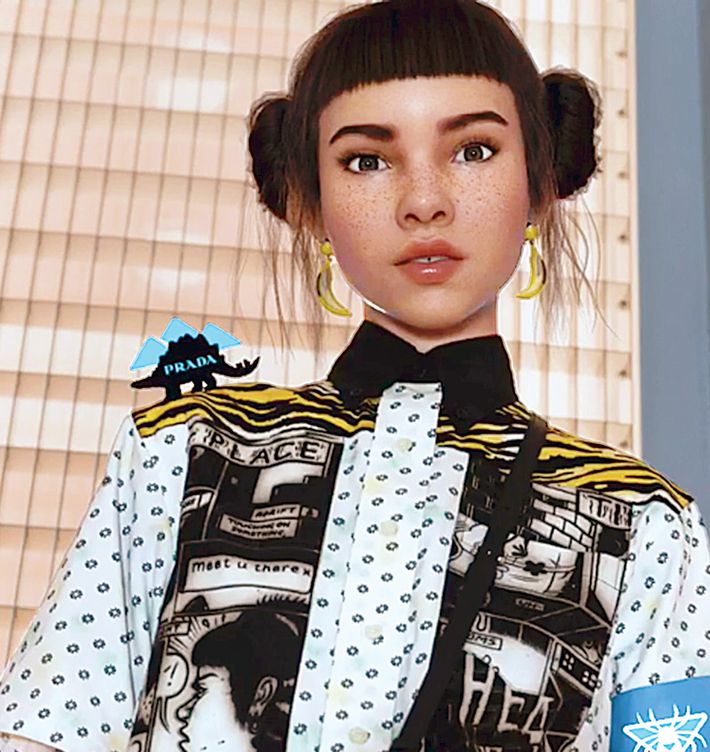
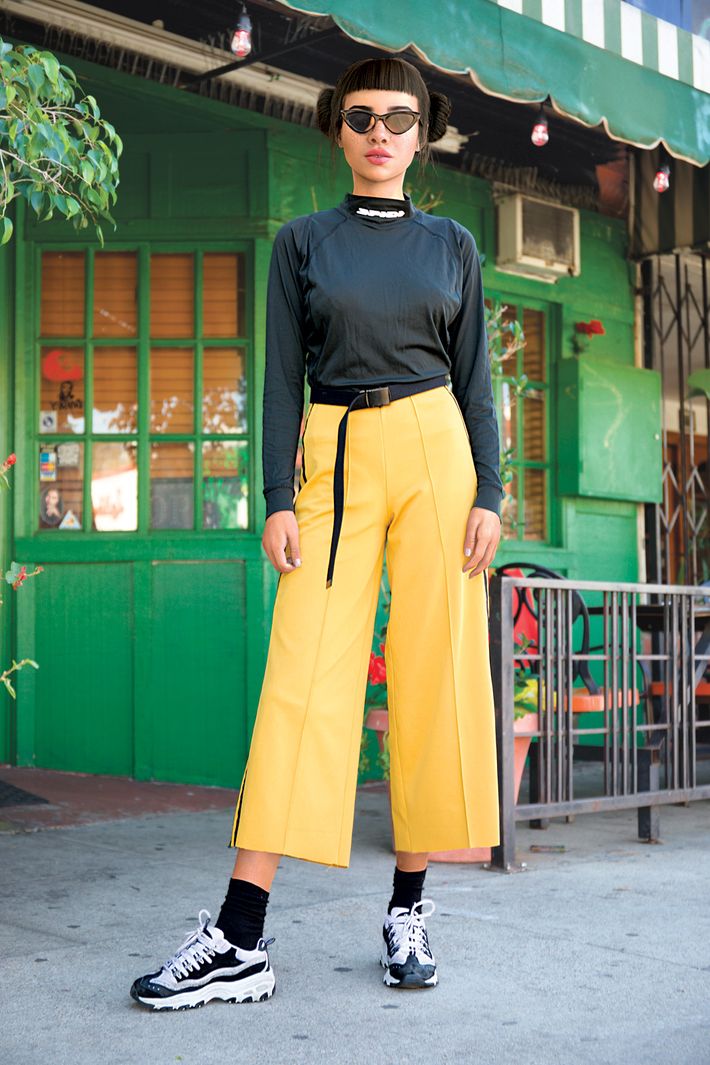
LaTurbo Avedon
website
“Simply put, the artist keeps her real identity unknown, but promotes and creates her web art using the screen name “LaTurbo Avedon.” This “avatar” is actively involved in most popular social media networks and exists as a sort of ongoing performance piece/persona cultivated by the artist. The relationship between her online and offline personalities is unknown, but LaTurbo has certainly captivated many curious followers online.”
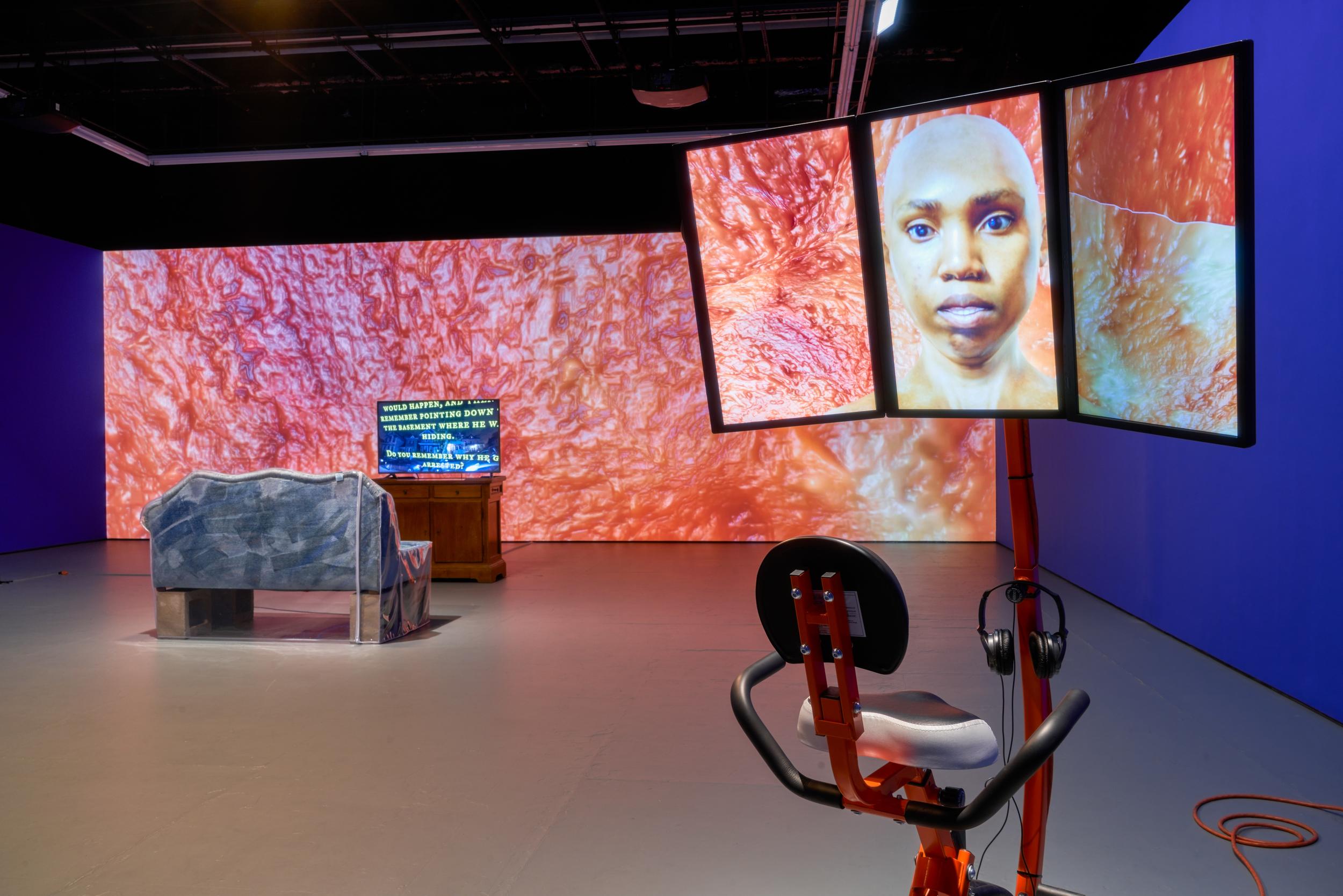
Graft and Ash for a Three Monitor Workstation by Sondra Perry
Artist Sondra Perry uses her digital avatar head which is based on scans of her own physique in several of her works. In Graft and Ash for a Three Monitor Workstation (2016), the viewer sits down on the small seat of a bike workstation ready for exercise and physical self-optimization. Being encircled and immersed in three screens, the viewer encounters Sondra Perry’s animated digital head up close. Her avatar then starts a conversation about bodily conditions, discrimination, identity, blackness and technology.
Tools/Themes
Facial reconstruction from photographs
https://github.com/YadiraF/PRNet
Animated faces from Still images
TRY IT HERE: https://www.myheritage.com/deep-nostalgia
ARTEC 3D SCANNER. IDM HAS THIS SCANNER. EMAIL ME IF YOU WANT TO WALK THROUGH USING IT
Photogrammetry – Photogrammetry is the process used to create the 3D model of an object, using multiple overlapping images of the subject. Getting started with Photogrammetry — with an Smartphone camera
3D Scanning– Survey of tools for iphone 3D Scanning
Scaniverse
Polycam
3D scanner app
Record3D
SiteScape
Everypoint
More…
Motion Capture
Lu Yang
Website
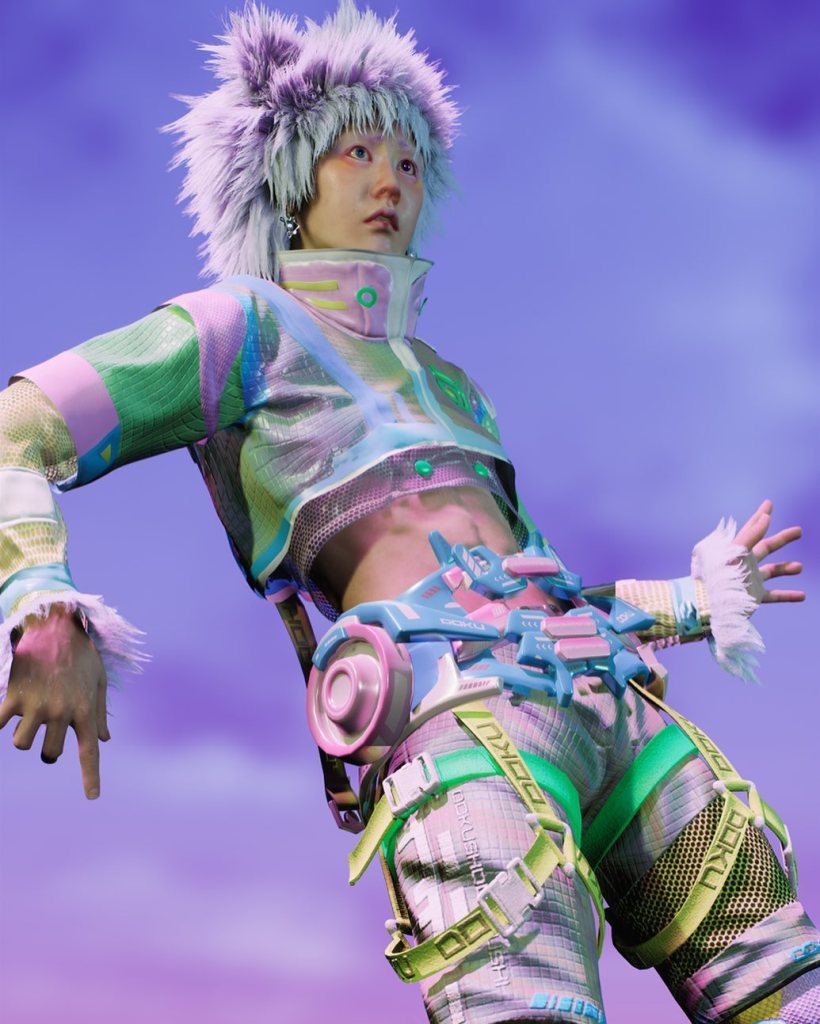
Artist Lu Yang uses her 3D-scanned head and body in her digital videos and installations in a variety of different roles and human-snake hybrid creatures. She builds digital worlds in which she merges references to manifold Asian cultures, Hindu and Buddhist religion, Japanese manga, goddesses and superheroes, computer games, and heaven and hell. Her cosmos resembles an intense, complex, fabulous, enthralling, fast-paced techno-feminist universe.
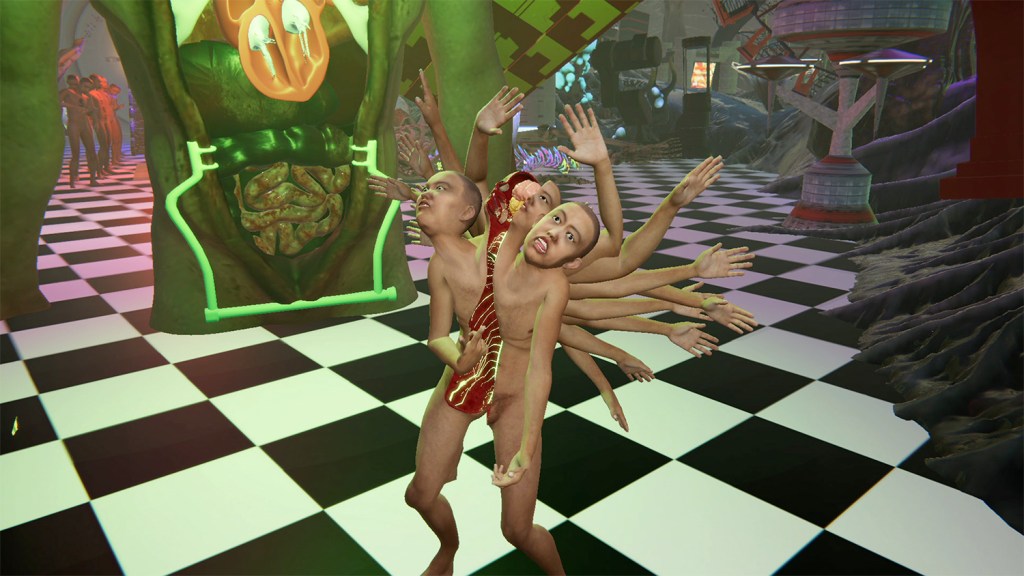
Human Machine Reverse Motion Capture Project, is concerned with how the human body can be trained to overcome physical limitations. Using the latest digital technologies, Lu explored the human mimicry of robots by recording contemporary dancing practices in Indonesia, India and Japan.
In January 2020, Lu completed the first stretch of her trip, travelling to Bali. There she met traditional Balinese dancers, whose movements are so carefully controlled that they can manipulate individual finger joints. Lu captured dance motion data from dancing actor I Wayan Purwanto, Legong dancer Ni Kadek Sudarmanti, Rangda dancer Made Sukadana and warrior dancer Dewa Putu Selamat Raharja.
Lu was also joined by renowned Japanese dancer kEnkEn. She managed to record his facial and body gestures and also capture a dance battle he initiated with local dancers on the doorsteps of a religious temple. Lu strives to reflect these moments in her final documentary. For the time being, Lu is preparing for the second part of her trip to Kerala, India. There she aims to capture the facial and eye movements of Kathakali dancers, revealing their resemblance to the workings of sensors and motors in advanced humanoid robotics.
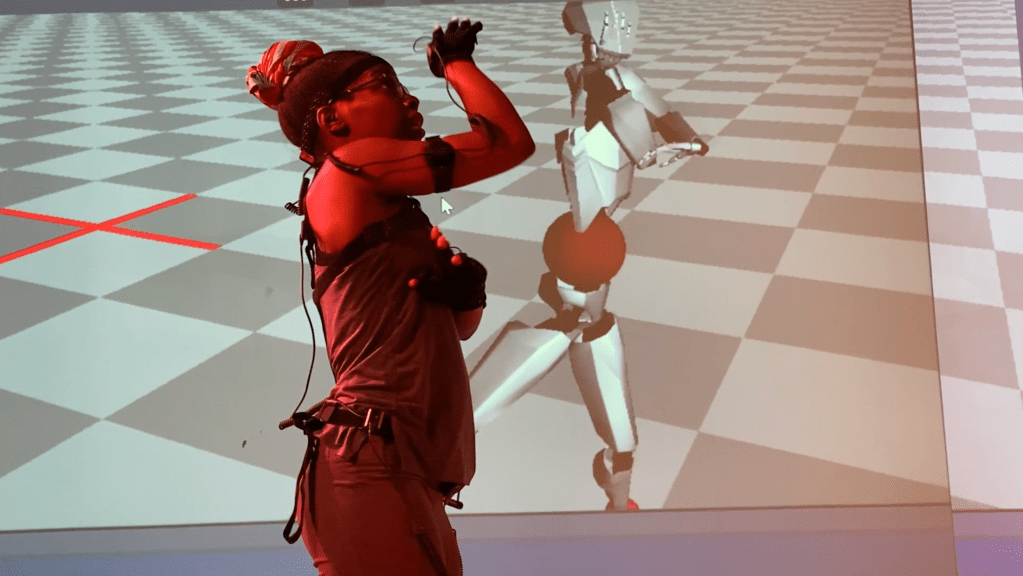
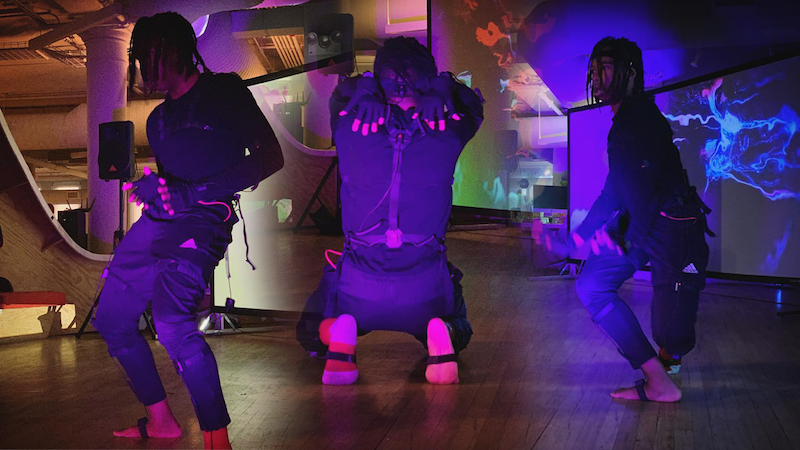
LaJuné McMillan’s Black Movement Project’
LaJuné recently created the ‘Black Movement Project’ (BMP), an online database of Black motion capture data and Black character base models

Jacolby Satterwhite
Dancing with Himself

Team Rolfes
more info
Motion capture is commonly used in visual effects production for films and video games, and VR is often known as a solitary experience. But Sam and Andy Rolfes are taking these tools developed primarily for behind-the-scenes work and repurposing them for live, interactive, and crowd-driven shows. As Team Rolfes, the brothers work together as a design studio that leans heavily into abstraction and symbolism to create performative art that everyone in the room can enjoy.
:no_upscale()/cdn.vox-cdn.com/uploads/chorus_asset/file/18334539/akrales_190719_3532_0035.jpg)
Steve and the Nerve
A show hosted in VR, streamed live over Twitch. The hosts are puppeting avatars using realtime motion tracking, and are setting up interactive games to play with the viewers who can participate via twitch chat.
Tools: https://www.mixamo.com/#/
Performances
Addie Wagenknecht & Pablo Garcia, Webcam Venus (contains nudity)
If asked if there is a difference between the Renaissance painting The Birth of Venus (1486) and a Playboy magazine centerfold, most might say it’s no contest: one is art and the other exploitative pornography. One is a treasure of human ideals and achievement, the other smut. Are Botticelli and Hugh Hefner really that different? Both project fantasy and erotic imagery through the media of their day. Both are vehicles of gender politics, defining standards of beauty and sexuality. What if adult performers—already mediated sex objects—struck “classic” poses? In Webcam Venus, we asked online sexcam performers to replicate iconic works of fine art.
In Webcam Venus, we asked online sexcam performers to replicate iconic works of art. This piece is an experimental homage to both fine art and the lowbrow internet phenomenon of cams. Sexcams use webcams and chat interfaces to connect amateur adult performers with an audience. Users log on to see men, women, transsexuals, couples and groups broadcast their bodies and sexuality live for the public, often performing for money. To create this experiment in high and low media, we assumed anonymous handles and spent a few hours each day for a month asking performers: “Would you like to pose for me?”
Jason Eppink, Kickback Starter
Explore more online performances: https://performingonline.tumblr.com/
 NEW LENSES: Experimental Capture and Release
Leave a comment