In class Wednesday 7/9

Using the lecture Not So Still Life: 3D capture, please make a still life composition that leverages an experimental tool we have discussed in class (or that you have come across on your own) in a unique way.
- Review the traditional approach to still lives below.
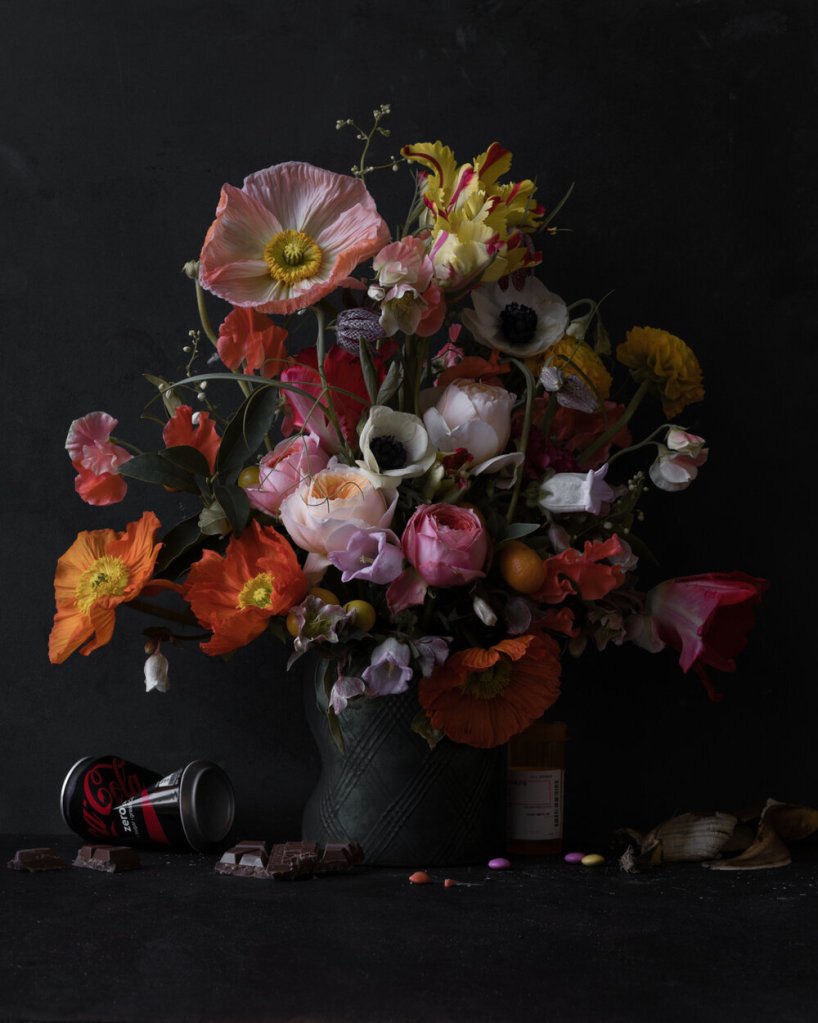
- Consider a contemporary twist on a traditional still life approach. What objects do you want to arrange? What do you want to say, capture, experiment with in this format?
- Experiment with a series of tools (you can mix and match approaches we have discussed so far) to create a unique approach to capturing and representing a still life. Consider photogrammetry, a 3D scanning smart phone app, 3D tools like those in illustrator or monstermash.zone.
- Create your composition in the form of an image, series of images, or gif. You can also host your composition as a 3D model on a site like sketchfab.com
- Add your work, a few lines of text, and a title to a blog post explaining your process and thinking.
- Select Unit 1 AND Project 3 as categories for the post
STILL LIFE
please review this page on Still Lives.

Still Life with Water Jug c.1892–3
The subject matter of a still life painting or sculpture is anything that does not move or is dead.
Traditional still life includes all kinds of man-made or natural objects, cut flowers, fruit, vegetables, fish, game, wine and so on. Still life can be a celebration of material pleasures such as food and wine, or often a warning of the ephemerality of these pleasures and of the brevity of human life (see memento mori).
Still lifes can include all kinds of man-made or natural objects. They can be realistic or abstract, familiar or unexpected or have a symbolic meaning related to celebration or death.

Bowl of Fruit, Violin and Bottle 1914
Lent by the National Gallery 1997
© Succession Picasso/DACS 2022

Bottle of Rum and Newspaper 1913–14
Tate

Still Life 1940
Tate
You add extra meaning to a work when you include things of personal significance. These things could be a photograph or a souvenir. Many twentieth century artists depict objects of cultural significance. Andy Warhol used real everyday objects to symbolise contemporary culture and consumerism.
A Little Death (2002)
by Sam Taylor-Wood
 NEW LENSES: Experimental Capture and Release
Leave a comment